
Smart Greenhouses: Thai Farmers' Answer to Climate Change
Rising temperatures, unpredictable droughts, off-season monsoons — Smart Greenhouses with IoT, AI, and automation are the lifeline for Thai farmers
The same story repeats every year: months of scorching drought burn crops to ash, rivers dry up — then monsoon season hits with torrential rain, flooding entire provinces and destroying everything in the fields.
“This year I planted watermelons on the same land I’ve farmed for 20 years. Three floods in one season. Lost over 3 million Baht.” — Mr. Somssak, Nakhon Sawan Province
This is no longer a “future” problem — it is today’s reality for Thai farmers. The question is: how do we adapt?
From “Planting by Nature” to “Data-Driven Farming”
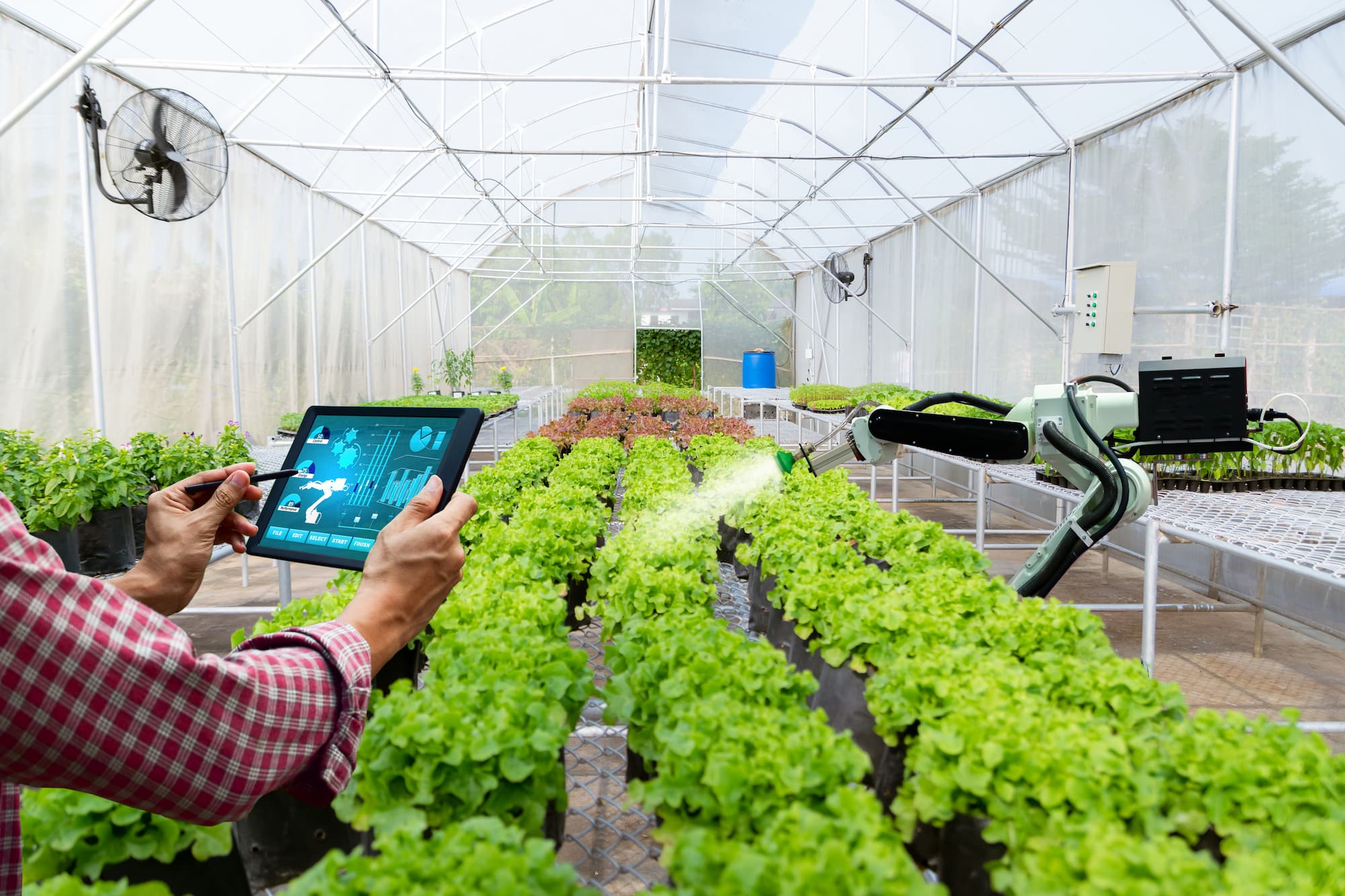
A Smart Greenhouse shifts from “letting nature decide” to “the farmer controls the environment” through three technology layers:
- IoT Sensors — Real-time monitoring of temperature, humidity, light, CO₂, soil moisture
- AI / Predictive Analytics — Analyzing trends and forecasting weather conditions ahead of time
- Automation Systems — Self-adjusting lights, temperature, humidity, and CO₂ release without human intervention
Think of it as a “refrigerator for plants” where you can say “today I want 26°C and 70% humidity” — and the system handles it automatically.
Climate Resilience — What Thai Farmers Need Most
🌡️ Unpredictable Temperatures → Greenhouse Eliminates the Problem
- Summer at 40°C+: Water misting systems + shade curtains + automated ventilation reduce internal temperature by 8-12°C
- Cold season: Heaters + thermal curtains maintain optimal plant temperatures even when outside air drops to 15°C
Result: Strawberries that used to grow only 3 months per year can now produce for 10-12 months.
💧 Drought / Heavy Rain → Total Water Control
- Close the roof during heavy rain — plants don’t rot from excess water
- Automated drip irrigation saves 60-70% compared to manual watering
- Water recycling — unused water is filtered and reused, not wasted
🌪️ Storms, Monsoons, Hail → Protective Fortress
Greenhouse structures withstand winds of 100+ km/h. Hail hits the roof but doesn’t reach the plants inside — your crops stay safe.
More Opportunities, Less Loss — Numbers Don’t Lie
Research from multiple countries and real-world data from Thailand show clear results:
| Metric | Open Field Farming | Smart Greenhouse | Difference |
|---|---|---|---|
| Yield per rai per year | 1 cycle | 2-4 cycles | +200-400% |
| Loss from disease/pests | 20-40% | 3-8% | -80% |
| Loss from weather | 15-30% | <2% | -90% |
| Water usage | 100% | 30-40% | Save 60% |
| Fertilizer/chemicals | 100% | 40-50% | Reduce 50% |
| Net income | ฿50,000/rai/year | ฿200,000+/rai/year | +300%+ |
Real Thai Example:
Smart Greenhouse Farmer Group, Phetchaburi Province (2023-2024)
- Cherry tomatoes grown inside IoT-enabled greenhouses
- Yield increased 3.5x (from 8 tons/rai → 28 tons/rai)
- Water and fertilizer costs reduced by 45%
- Average income jumped from ฿80,000 to ฿350,000 per rai per year
Types of Smart Greenhouses for Thai Farmers
Not everyone needs millions to start. KoMoMi recommends starting at your level:
🟢 Entry Level (฿50,000-150,000)
- PVC / galvanized steel frame greenhouse
- Temperature + humidity + soil moisture sensors
- Water misting + fan with Timer control
- Best for: Lettuce, morning glory, cabbage, coriander
🟡 Intermediate Level (฿150,000-500,000)
- Steel + aluminum greenhouse structure
- Full IoT system + mobile Dashboard
- Automated shade curtains + Drip irrigation + misting
- Best for: Cherry tomatoes, strawberries, premium melons
🔴 Professional Level (฿500,000-2,000,000+ per rai)
- High-quality glass or Multispan greenhouse
- AI Analytics + Computer Vision for plant disease detection
- Hydroponic / Aeroponic systems
- LED Grow Light + CO₂ Enrichment
- Best for: Medium-to-large commercial farms, export, or Organic Premium
Thailand’s Climate is Changing Faster Than Expected
Data from the Thai Meteorological Department (2023):
- Average temperature in Thailand has risen 1.2°C over the past 50 years
- Number of days above 35°C has increased by 40% compared to 1977
- Monsoon rainfall is increasingly erratic — some years 30% below normal, others 50% above
“If farmers continue with traditional methods, yields will decrease 15-25% every 10 years” — Ministry of Agriculture and Cooperatives Report (2023)
This is why we must adapt now.
Smart Greenhouse + Precision Farming = The Future of Thai Agriculture
Combining smart greenhouses with precision farming enables:
🎯 Water Only When Needed, Not by Schedule
Soil moisture sensors tell exactly when plants need water — no more guessing whether to water today.
🌱 Fertilize Based on Actual Soil Conditions
NPK + EC + pH sensors measure soil several times daily. The system delivers fertilizer formulas that match what the soil actually needs — not based on one-time experience.
🤖 Detect Disease Before Human Eyes Can See
AI cameras + Computer Vision can spot 1mm spots on leaves at the earliest stage — before disease spreads across the entire plot.
Limitations to Accept (and Solutions)
Nothing is 100% perfect:
| Limitation | Solution |
|---|---|
| High initial investment | Start Modular — expand section by section |
| Need to learn technology | KoMoMi provides free training throughout usage |
| High electricity usage (lights/fans) | Install Solar Panels on greenhouse roof |
| Requires periodic maintenance | Automated Alert system sends Line notifications |
Summary: Why Start Now?
- Climate is changing faster than expected — traditional farming will cause increasing damage every year
- Markets demand high-quality produce — greenhouses deliver consistent, premium-quality harvests
- Income increases 3-5x compared to open-field farming
- Sensor data = Asset — 3-5 years of data can qualify for bank loans
- KoMoMi makes starting easier — from zero to profitable step by step
“It’s not about ‘whether you can afford to invest’ — it’s about ‘how to invest smart.’ A smart greenhouse pays itself back within 2-3 years.” — KoMoMi Farm Intelligence
References
- WINSS — Smart Greenhouses: Technology for Modern Agriculture
- “Impacts of Climate Change on Thailand’s Agriculture and Food Sector” — Thai Meteorological Department (2023)
- Ministry of Agriculture and Cooperatives — Guidelines for Adapting to Drought and Flood (2024)
- FAO — Climate-Smart Agriculture Sourcebook (2023)
- Smart Agriculture Research Center, Kasetsart University — IoT Implementation Report in Thai Vegetable Greenhouses (2023)